UK car industry faces ‘difficult trade-off’ between Chinese and EU markets
<p>Britain under pressure to put tariffs on cheap Chinese vehicle imports ahead of protectionist trade measures</p><p>Britain’s car industry is grappling with a “difficult trade-off” between China and Europe, as manufact
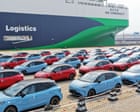
UK car industry faces ‘difficult trade-off’ between Chinese and EU markets Britain under pressure to put tariffs on cheap Chinese vehicle imports ahead of protectionist trade measures
Britain’s car industry is grappling with a “difficult trade-off” between China and Europe , as manufacturers struggle to balance the benefits of both markets ahead of looming trade measures that could restrict UK exports to the EU.
The UK is an outlier in choosing not to put import taxes on Chinese vehicles, even as the US has shut them out almost entirely , and the EU imposes duties of up to 45% .
EU officials reportedly warned Andy Burnham last month that the UK must put tariffs on cheap Chinese vehicles otherwise Brussels would impose protectionist “made in Europe” barriers on British exports to the bloc, hitting British carmakers in their largest market.
Ministers have so far resisted such calls, with Jonathan Reynolds, the business secretary, arguing any levies would “probably be reciprocated” – costing UK manufacturers sales in China .
Tariffs would also raise prices for British drivers, who have flocked to cheaper Chinese models , and could deter brands such as Chery, which is in talks to build cars at Nissan’s Sunderland plant , from investing further in the UK.
“There is a difficult trade-off,” said Emily Sawicz, of the consultancy RSM UK, adding that the UK “cannot afford to drift between the two indefinitely”. Chinese investment could be a “lifeline” for carmakers, while access to Europe would also be “crucial” for smaller manufacturers.
“Being excluded risks UK suppliers becoming increasingly shut out of those European opportunities,” she added. “Manufacturers need clarity on which direction the government intends to take so they can make long-term investment decisions.”
Ian Plummer, commercial director at Autotrader, said competition from Chinese brands had made cars more affordable and “is encouraging more people to go and buy a new car”.
Brands such as BYD, Omoda and Jaecoo more than tripled their share of the UK new car market in the first eight months of 2026, reaching 12% of sales, according to industry figures.
Figures released on Friday showed that British new car registrations rose 12% in the year to September, the best month for annual growth since 2017. The preliminary data from the Society of Motor Manufacturers and Traders (SMMT) showed the boom was powered by a demand for electric vehicles and Chinese brands, with the Jaecoo 7 and BYD’s Sealion 7 among the top sellers.
The trade body said on Wednesday that the European Commission’s made in Europe rules, which restrict subsidies, tax breaks and public procurement contracts to vehicles built within the EU, pose an existential threat to British car production. The EU accounted for 58% of UK car exports in the first half of the year, compared with about 4% for China.